
For drone pilots, field crews and mapping businesses
Your technology can be precise.Your project can still be wrong.
The receiver says fixed. The software says the error is tiny. Then your numbers land next to a surveyor's, and they don't match. The Survey School teaches the people collecting the data how to find out why, fix it, and prove it.
You don't need to be a surveyor to join, and surveyors are members too.
Watch this first
Why good equipment still produces wrong projects.
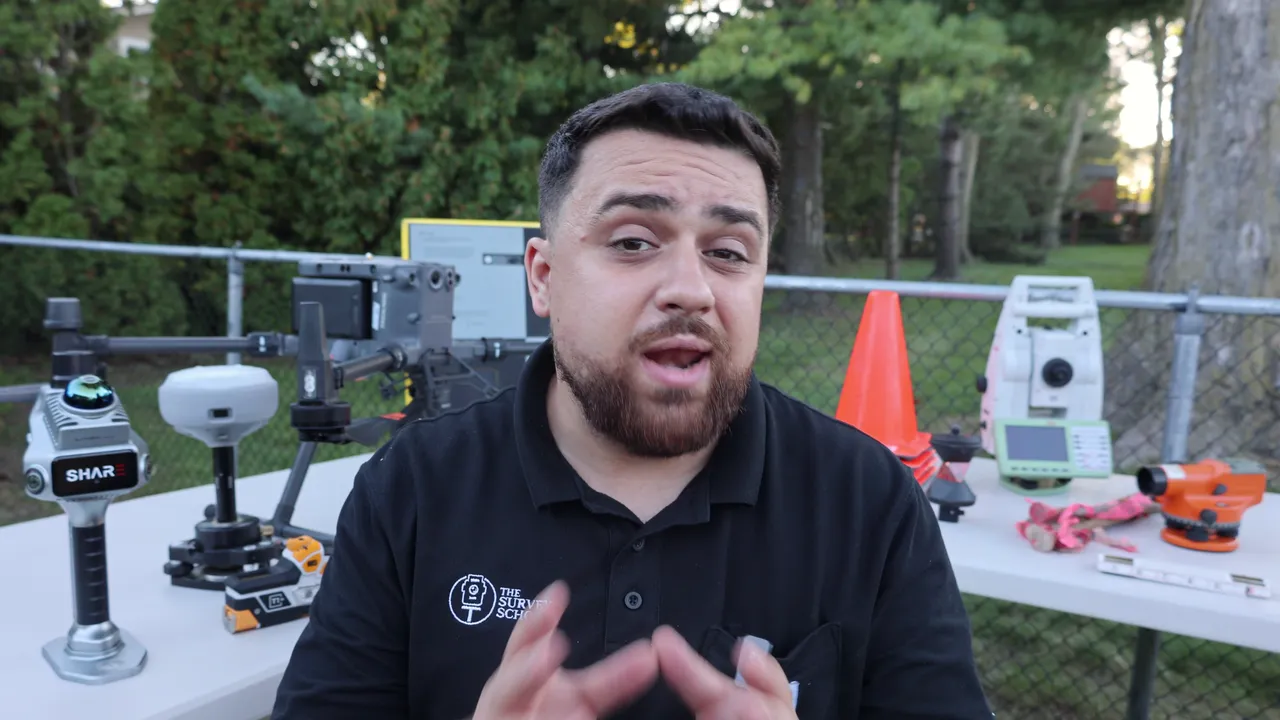
Member results in the video are their own and are not typical.
Sound familiar?
If you collect the data, you have probably said one of these.
“My points don't match the engineer's, and I can't tell which of us is wrong.”
“The checkpoint error came back too high and I have no idea where it came from.”
“I only ever get float. Or I get fixed, and I still do not trust it.”
“State plane, local, WGS84, feet, US survey feet. I am guessing at the settings.”
“I do not want to hand over pretty pictures. I want data a surveyor can use.”
“Everything I know came from YouTube. I don't know what I don't know.”
None of that is a gear problem. It is the survey side of the work, and most people collecting data were never taught it.
The gap
Precise is not the same as accurate.
Fourteen shots that agree within 8 mm tell you the instrument is consistent. They do not tell you the point is where you think it is.
A base set on the wrong coordinate. The wrong geoid. An antenna height measured to the wrong mark. A project on a coordinate system nobody told you about. Each one gives you a tight, confident, wrong answer, and the screen stays green the whole time.
The fix is not another receiver. It is control, coordinate systems and independent checks: the survey side of the work. That is what we teach.
What you learn
Diagnose. Adjust. Deliver.
It is a 12-month program built on one method. You learn to find out whether your data is right, fix it when it is not, and hand over something a surveyor or engineer can rely on.
01
Diagnose
Know whether your data is right before it leaves your hands.
Check it against control and independent checkpoints, and learn to read what the residuals are telling you. Good and bad stop looking the same.
02
Adjust
Fix it at the cause, not at the desk.
Base setup, corrections, coordinate systems, geoid, antenna heights, ground control. One variable at a time, with a reason for each, so the error stops showing up.
03
Deliver
Hand over work a surveyor or engineer can check and rely on.
Control reports, surfaces, volumes and CAD linework, with the accuracy written down so the person receiving it can see how you got there.
Who it is for
Four kinds of people join. Which one are you?
Drone pilots
You can fly the mission. You want to hand over data a surveyor or engineer will accept.
See how it worksField crews
You run the rover, the total station or the company drone, and you learned it on the job.
See how it worksBusiness owners
Client work is going out now, and you want it checked before the client sees it.
See how it worksTeams
You are responsible for what a whole crew collects, and you want them trained the same way.
See how it worksNot sure which one you are? The accuracy check works it out in two minutes.
Inside the membership
What you get as a member
Six courses, one every 30 days
Intro to Survey, GPS/GNSS, Least Squares Adjustments, GIS for Surveyors, CAD Drafting, and Legal and Boundary Survey. One at a time, so you are never trying to learn everything at once.
A live lecture and Q&A every week
Bring your own data and the exact spot you are stuck on. Every session is recorded.
Licensed surveyors answering every day
Licensed, practicing surveyors answer questions in the community. Members help each other too.
Workshops, field days and Geo Week
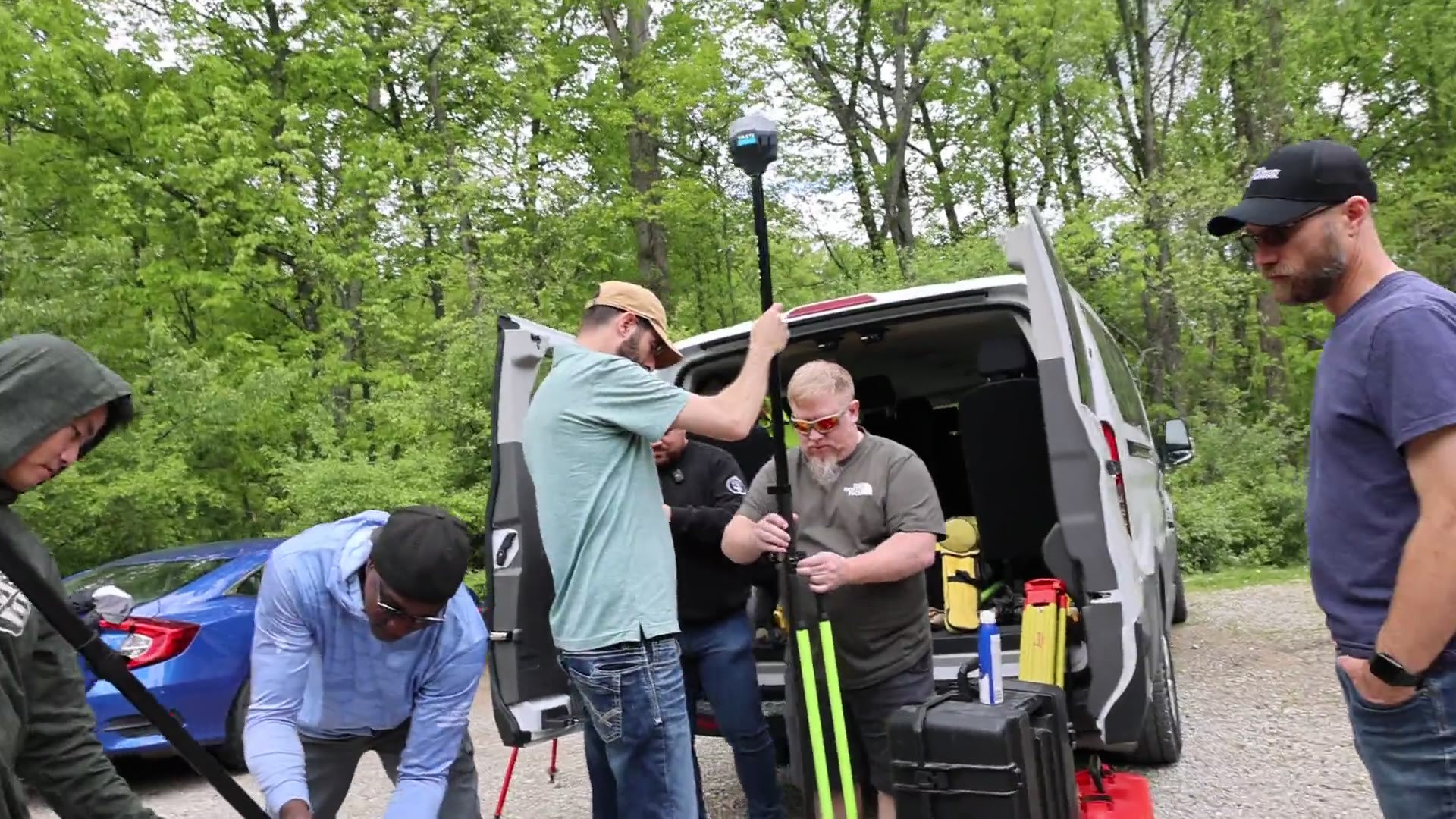
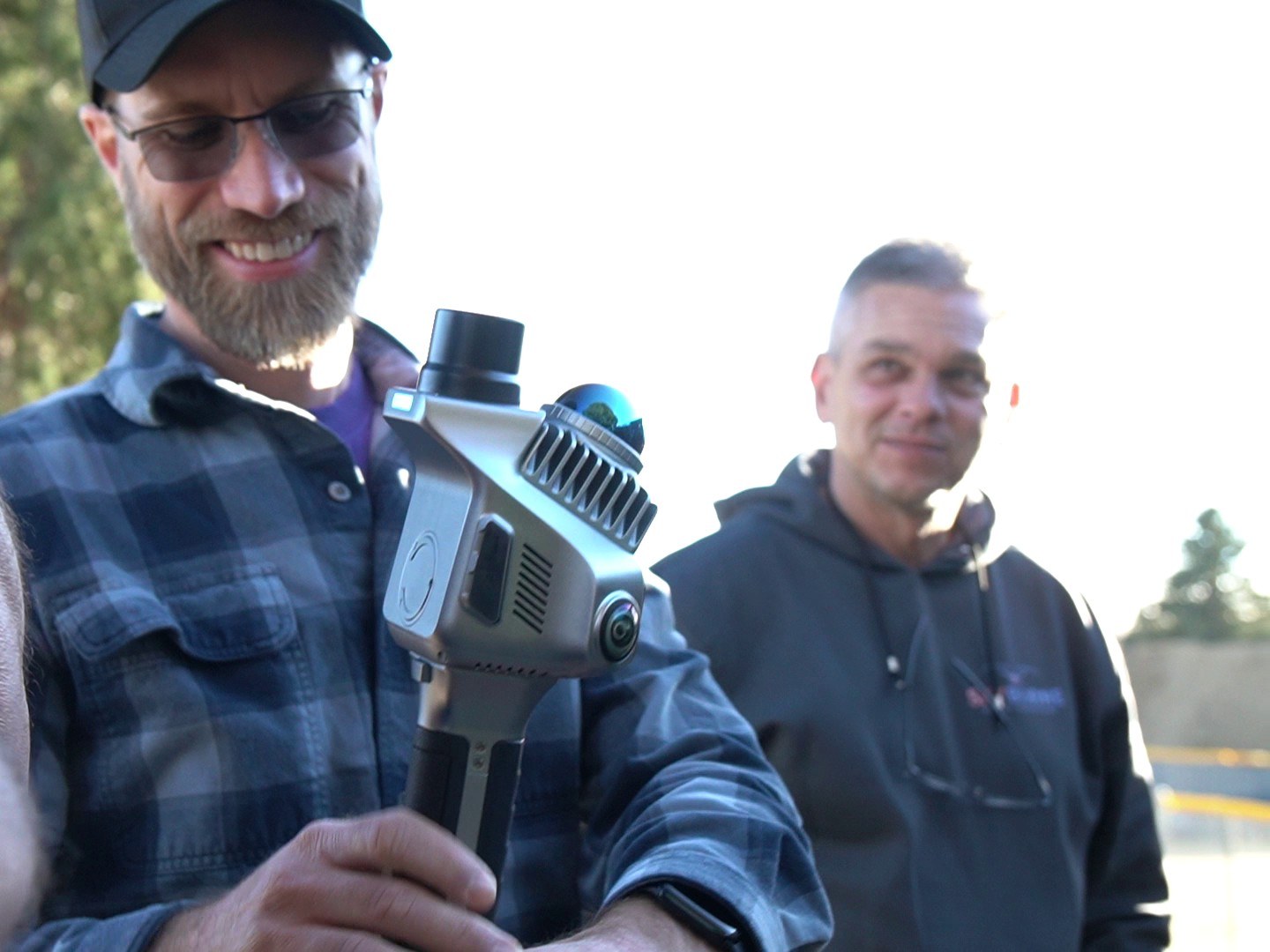
Hands-on days on live job sites, with the instructors and other members. Stay a year and we fly you to Geo Week, with your lodging and a full conference pass covered.
Equipment rewards on the yearly plan
Pix4Dmatic Pro, an Emlid Reach GNSS receiver, Emlid Flow Pro and GEODNET corrections, unlocked as you reach higher levels in the community. Not on day one.
A certificate for each course
Pass the final exam for a course and you earn its certificate.



The equipment rewards are part of the yearly plan only. You do not need your own gear to start: there is sample data to practice on.
What members say
Meet your instructors.
All three are practicing professionals, and two are licensed surveyors. They show you what they look for in work like yours and how to get it right the first time.
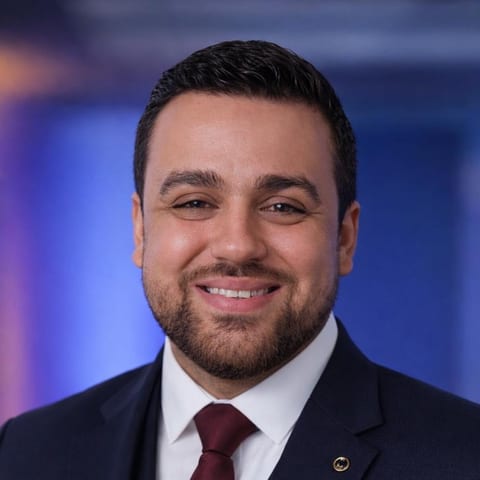
Rami Tamimi, P.S.
Professional Surveyor · PhD Candidate, Geodetic Engineering, OSU · Founder
Over a decade of land development experience, plus three years tuning sensor alignment for self-driving systems. Teaches drones, LiDAR and photogrammetry, and the survey fundamentals that make them accurate.
Joe Nelson, PLS
Licensed Professional Land Surveyor
Project Manager at BKF Engineers with 14 years of professional surveying. Teaches how survey work gets done on real projects: boundary, topo, ALTA, control networks, and final maps ready for stamp.

Dr. Joseph Kerski, PhD GISP
PhD Geography · GISP · Author of 12 books · Former Esri Education Manager
Geographer and GIS educator with three degrees in geography and 22 years across NOAA, Census, and USGS. Teaches GIS and spatial analysis.
Also on the team: Dr. Ryan Hughes (Pix4D, head of training) and Mariana (Emlid, technical support).
Not a surveyor?
You don't need a license to collect good data. You do need to know where the line is.
Certifying a survey takes a license. Collecting accurate data does not. It takes a method you follow every time, and the habit of writing down how you know it is right.
We teach the method, how to document it, and how to work with a licensed surveyor so they can rely on what you hand them. Licensed, practicing surveyors are instructors and members here, and they answer questions in the community every day.