Your best surveyor shouldn't be your only training system.
Train your whole crew to collect data the same accurate way, and see who is ready before you send them out alone.
Every seat gets the full program all year, and you see each person's progress and quiz scores in one dashboard.
The work is there. The capability sits with one or two people.
You're subbing out work you could be doing.
Scanning and drone deliverables go to someone else, at your client's expense and someone else's margin.
One person is the whole capability.
When he's on another site, the job waits. When he leaves, it leaves with him.
You can't tell who actually knows it.
People say they're comfortable with the gear. You find out they weren't when the data comes back wrong.
Training all year, for everyone on the team.
Every seat
The full program, all year
A training day is an event. Competence is not. A workshop reaches whoever stood there that morning and is gone by the next job. Every seat gets the courses, the weekly live lecture and Q&A, and the community for the whole year. Seats belong to the company, so a new hire can take a seat: someone hired in March starts in March.
Larger teams
A day on site with your crews
On the 10-seat plan, Rami spends one training day at your office and in the field with your crews: survey control, GNSS, drone mapping, processing and deliverables, hands on your equipment, on the work your clients are asking for now.
You'll know who's ready before you send them out alone.
- See each person's progress, completion and quiz scores
- See who has passed a final exam and earned the certificate
- Follow up without asking anyone how it's going
- Seats belong to the company, so when someone leaves the seat moves to the next person
Your crew · 6
Progress · Quiz avg · Status
Marcus Delgado
Party Chief
82% complete
Tyler Brooks
Instrument Operator
64% complete
Alyssa Tran
Field Engineer
71% complete
Brandon Reyes
Rodman
38% complete
Sam Patterson
CAD Technician
55% complete
Derek Kowalski
Drone Pilot
44% complete
The manager view shows every seat's progress, quiz scores and certification status in one screen.
Proof of who actually learned it.
Each course ends in a final exam, and everyone who passes earns a certificate, so you can see who is ready instead of taking their word for it. If your firm has its own written field procedures, ask us on the call about building a track around them.
Every seat is the full program, all year.
A new course every 30 days
Surveying fundamentals, GNSS, least squares, GIS, CAD and legal principles, unlocking one at a time.
A weekly live lecture and Q&A
With industry professionals, including Rami Tamimi P.S., Joe Nelson P.L.S. and Dr. Joseph Kerski GISP.
Quizzes and a final exam
Tied to the lectures, and the source of the scores in the manager view. Pass the final exam and earn a certificate.
Licensed surveyors in the community
Licensed, practicing surveyors answer questions about real jobs.
A manager dashboard
Progress, completion and quiz scores for every seat, in one screen.
A working community
Working professionals asking real questions about real jobs.
Meet your instructors.
All three are practicing professionals, and two are licensed surveyors. They show you what they look for in work like yours and how to get it right the first time.
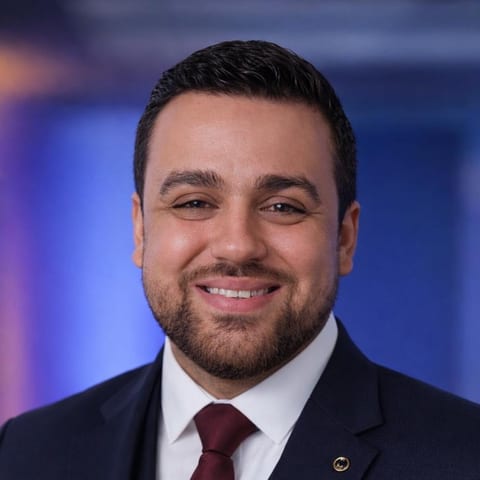
Rami Tamimi, P.S.
Professional Surveyor · PhD Candidate, Geodetic Engineering, OSU · Founder
Over a decade of land development experience, plus three years tuning sensor alignment for self-driving systems. Teaches drones, LiDAR and photogrammetry, and the survey fundamentals that make them accurate.
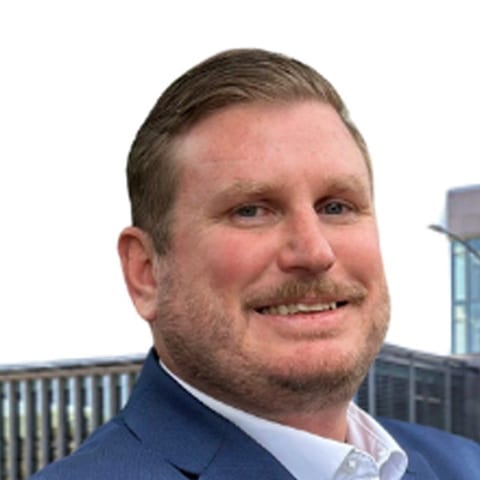
Joe Nelson, PLS
Licensed Professional Land Surveyor
Project Manager at BKF Engineers with 14 years of professional surveying. Teaches how survey work gets done on real projects: boundary, topo, ALTA, control networks, and final maps ready for stamp.

Dr. Joseph Kerski, PhD GISP
PhD Geography · GISP · Author of 12 books · Former Esri Education Manager
Geographer and GIS educator with three degrees in geography and 22 years across NOAA, Census, and USGS. Teaches GIS and spatial analysis.
Also on the team: Dr. Ryan Hughes (Pix4D, head of training) and Mariana (Emlid, technical support).
Reviews from Members
Tell us about your firm.
Two minutes. If it is a fit, the next step is a short call with Rami. Pricing is covered on that call and is based on your headcount.
No payment and no commitment. This only opens the conversation.